Anxiety rarely stays confined to the mind. It shows up as a racing heart, tight chest, shallow breathing, dizziness, or a stomach in knots, leaving you searching for ways to feel steady again. Grounding techniques offer a practical bridge between panic and calm by pulling your attention back into your body and the present moment. This article walks through specific, body-based grounding strategies and explains when it might be time to bring in outside support.
Recognize How Anxiety Shows Up Physically
Before grounding techniques can help, it is useful to understand why anxiety creates physical symptoms in the first place. When the brain perceives a threat, it activates the fight-or-flight response, flooding the body with adrenaline and cortisol. This causes real, measurable changes such as a faster heartbeat, tense muscles, and shallow breathing, even when there is no actual danger present.
Many people mistake these sensations for a serious medical problem, which can spike anxiety even further. Chest tightness might feel like a heart issue, while a lump in the throat can feel like something is physically wrong. Recognizing these as anxiety symptoms, rather than a separate illness, is the first step toward using grounding effectively.
- Rapid heartbeat or heart palpitations
- Shallow, quick breathing or a feeling of breathlessness
- Muscle tension, especially in the neck, shoulders, and jaw
- Dizziness, lightheadedness, or a floating sensation
- Nausea or a tight, uneasy stomach
Use the Five Senses to Anchor Yourself
One of the most reliable grounding methods is the five senses technique, sometimes called the 5-4-3-2-1 method. It works by shifting your attention away from anxious thoughts and toward concrete sensory input happening right now. Because the brain can only focus on so much at once, actively engaging your senses leaves less room for spiraling thoughts.
To practice this, slowly name five things you can see, four things you can touch, three things you can hear, two things you can smell, and one thing you can taste. Go slowly and describe each item with detail, such as its color, texture, or temperature. This exercise works well in public places, at your desk, or even while lying in bed during a middle-of-the-night anxiety spike.
Practice Breathing Exercises That Calm the Nervous System
Breath is one of the few automatic bodily functions you can consciously control, which makes it a powerful grounding tool. Slow, deep breathing signals to your nervous system that you are safe, helping to lower heart rate and ease muscle tension. Box breathing, in which you inhale for four counts, hold for four, exhale for four, and hold again for four, is a simple pattern many people find effective.
If shallow or rapid breathing during anxious episodes feels like it never fully resolves, it may be worth speaking with a breathing disorder specialist rather than assuming it is anxiety alone. Some people have underlying issues, such as hyperventilation syndrome or mild asthma, that overlap with and intensify anxiety symptoms. Getting a proper evaluation can clarify whether you are dealing with a purely psychological response or a physical breathing pattern disorder that needs separate treatment.
- Box breathing: four-count inhale, hold, exhale, hold
- Diaphragmatic breathing using the belly rather than the chest
- Extended exhale breathing, making the exhale longer than the inhale
- Pursed-lip breathing to slow the pace of each breath
Engage Your Muscles With Physical Grounding
Progressive muscle relaxation is a technique where you deliberately tense and then release different muscle groups throughout the body. Starting at your feet and working upward, hold each tension for about five seconds before letting go completely. This contrast between tension and release helps your body remember what true relaxation feels like, which can be hard to access during high anxiety.
Physical grounding can also include pressing your feet firmly into the floor, gripping the arms of a chair, or holding a cold object like an ice cube. These sensations give your nervous system something concrete to focus on besides anxious thoughts. Over time, practicing these techniques regularly, rather than only during a crisis, makes them easier to access when you actually need them.
Consider Movement-Based Approaches for Long-Term Relief
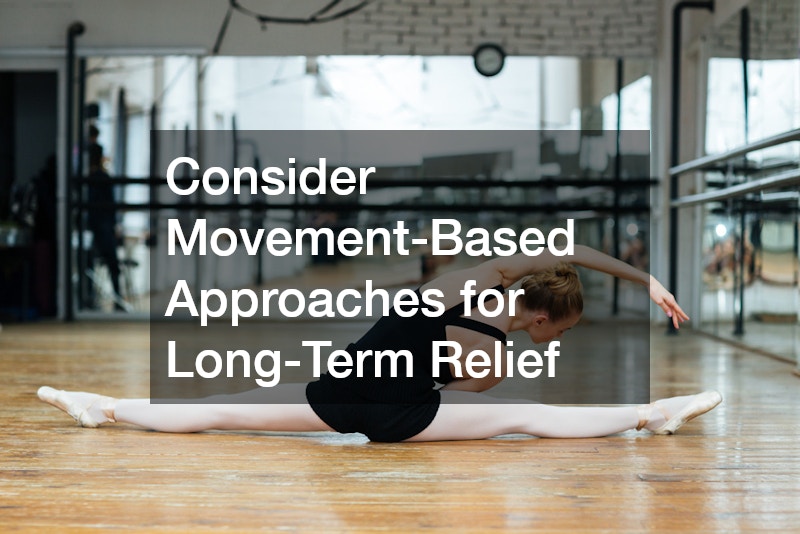 Regular physical movement helps regulate the nervous system over time, not just in the moment of an anxiety spike. Activities with structure and rhythm, such as ballet classes, can be particularly grounding because they require sustained focus on posture, breath, and precise movement. This kind of focused attention pulls the mind away from rumination and builds a stronger connection between mental state and physical control.
You do not need to be a dancer to benefit from movement-based grounding. Walking, swimming, yoga, and stretching all offer similar advantages by combining physical exertion with present-moment awareness. For those with mobility challenges, accessible transportation options like handicap vans can make it easier to get to a pool, park, or studio where these activities are possible. The key is choosing something you can do consistently, since the nervous system benefits build gradually rather than after a single session.
- Ballet classes or other structured dance for posture and focus
- Yoga for combining breath work with movement
- Walking outdoors to add sensory grounding through nature
- Swimming for rhythmic breathing and full-body engagement
Understand Mobility Needs During Anxiety-Related Physical Strain
For some people, anxiety and physical limitations overlap in ways that complicate grounding practices. Someone recovering from whiplash injuries, for example, may find that certain breathing or stretching exercises aggravate neck pain, making physical grounding techniques feel counterproductive at first. In these cases, the goal isn’t to avoid grounding altogether but to adjust which movements you rely on. Deep breathing exercises that involve tilting the head back or rolling the neck can strain already-sensitive muscles, so switching to seated diaphragmatic breathing with the head in a neutral position is often a safer starting point. Similarly, grounding techniques that require scanning the body while lying flat may need to be done in a reclined chair instead, reducing pressure on the cervical spine. Pain flare-ups can also be a trigger for anxiety themselves, creating a loop where the very techniques meant to calm you end up reinforcing distress. Paying attention to which movements cause discomfort, and having a backup plan such as focusing on hand or foot sensations instead of neck-based awareness, keeps grounding accessible without risking further injury. It is important to modify grounding exercises to fit your actual physical capacity rather than forcing movements that cause pain. If you’re unsure which adjustments are appropriate, checking with a physical therapist or doctor before starting a new grounding routine can help you avoid setbacks while still building a toolkit that works for your body.
Chronic pain and limited mobility can themselves become a source of anxiety, creating a difficult cycle where physical discomfort triggers worry, and that worry, in turn, tightens muscles and heightens pain perception. Breaking this loop often requires more than mental strategies alone. It means looking honestly at what your body needs to move through the world safely and confidently. For individuals with more significant mobility challenges, tools like disability scooters can restore a sense of independence that reduces daily stress and anxiety tied to feeling housebound or dependent on others. Being able to run errands, attend appointments, or simply sit outside without exhausting pain can shrink the anxious thoughts that build up around isolation. Over time, this restored autonomy can lower baseline stress levels, making grounding techniques far more effective when anxiety does spike. Other supports worth considering include canes, walkers, compression garments, or even minor home modifications like grab bars and ramps. Each of these tools addresses a specific physical limitation, so it helps to assess which daily tasks cause the most strain, whether it’s standing for long periods, walking distances, or climbing stairs, and match the support to that need. Addressing the practical barriers to movement is sometimes just as important as the grounding technique itself. A body that feels safer and more capable physically has more room to respond to calming exercises, rather than being locked in a constant state of guarding against pain or falls.
- Modify stretches to avoid aggravating neck or back injuries — try seated neck tilts instead of full rotations, or wall-supported shoulder rolls
- Use supportive seating during breathing exercises if standing is difficult, choosing a chair with firm back support to keep airways open
- Explore mobility aids like canes, grab bars, or wheeled walkers that reduce daily physical and emotional strain
- Ask a physical therapist which movements are safe during recovery, including safe ranges of motion and warning signs to stop
- Pace grounding exercises in short 2-3 minute intervals to avoid overexertion during flare-ups
- Keep a log of which movements trigger discomfort so you can adjust routines with your therapist over time
Address Underlying Health Conditions That Mimic or Worsen Anxiety
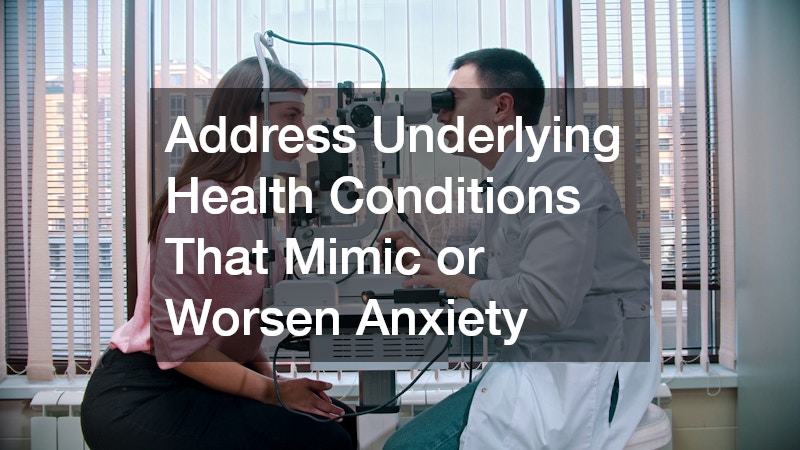
Certain neurological and physical conditions can produce symptoms that closely resemble or intensify anxiety, which is why ruling out other causes matters. A specialist at a parkinsons movement and disorder center, for instance, can help distinguish between tremors caused by anxiety and those linked to a neurological condition. Getting an accurate diagnosis prevents someone from managing the wrong problem for months or years.
Vision changes can also contribute to disorientation that feels a lot like anxiety, including dizziness or a sense of unsteadiness. Scheduling a visit with an eye dr to rule out vision-related causes is a reasonable step if grounding techniques that rely on sight, like the five senses method, feel unusually difficult or disorienting. Addressing the physical root cause makes psychological grounding techniques more effective going forward.
Recognize When Cosmetic Procedures Intersect With Body Image Anxiety
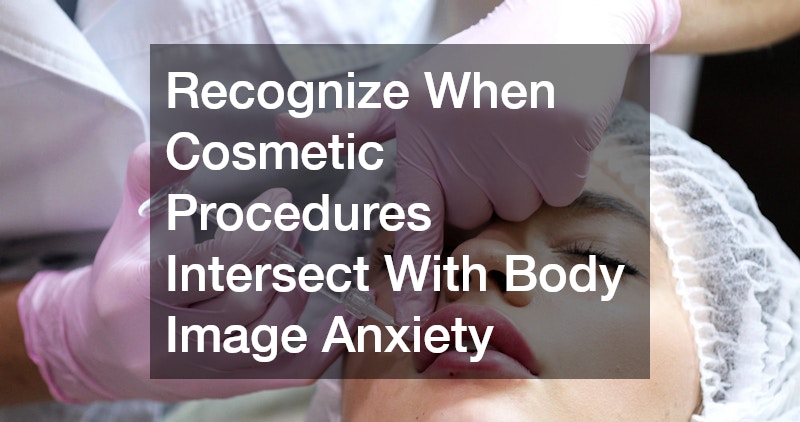
Anxiety about physical appearance can create tension that shows up in the body just as much as generalized anxiety does—tight shoulders, a clenched jaw, a racing heart before a social event, or a persistent urge to check mirrors and photos. Some people pursue cosmetic procedures such as lip fillers or a Madonna eye lift hoping to ease self-consciousness about a specific feature. These choices are personal, and there’s nothing wrong with wanting to look and feel your best. That said, cosmetic changes do not replace the need for grounding skills that address the anxiety itself. Research on body dysmorphic tendencies suggests that satisfaction after a procedure is often short-lived if the underlying anxious thought patterns go unaddressed; attention simply shifts to a new perceived flaw. Feeling anxious about appearance often has deeper roots—perfectionism, past criticism, social comparison fueled by social media—that a filler or lift alone cannot fully resolve. A useful gut check before any procedure is to ask whether the motivation comes from genuine preference or from a wish to quiet a nagging, anxious inner voice. If it’s the latter, pairing the decision with grounding techniques, and possibly a conversation with a therapist, can help ensure the anxiety doesn’t simply resurface elsewhere.
If body image concerns are driving frequent anxious episodes, it helps to separate the cosmetic decision from the emotional pattern underneath it. A useful gut check: notice whether the urge for a procedure spikes right after a stressful event, a scroll through social media, or a comment from someone else, versus a desire you’ve felt steadily over months regardless of your mood. Anxiety-driven urges tend to feel urgent and all-consuming in the moment, then fade once the anxious spike passes. Grounding techniques can reduce the intensity of anxious spirals in the moment, giving you space to think clearly about whether a procedure is something you want for yourself, rather than a reaction to anxiety. Try pairing a grounding exercise, like slow breathing or naming five things you can see, with a short waiting period before making or confirming any appointment. A common guideline used by some cosmetic practices is a 30-day cooling-off window; even a self-imposed version of this can reveal whether the desire holds steady or was tied to a passing emotional low. It also helps to ask more pointed questions: Would I still want this if no one ever saw or commented on it? Am I hoping this will fix how I feel about myself generally, or address one specific feature I’ve considered for a long time? If the honest answer points toward relief from anxiety rather than genuine preference, that’s worth exploring with a therapist before scheduling a consultation. Being honest about that distinction leads to decisions you feel more settled about long term, whether that means moving forward with a procedure confidently or recognizing that the anxiety itself is the thing that needs addressing first.
Know When to Seek Professional Mental Health Support
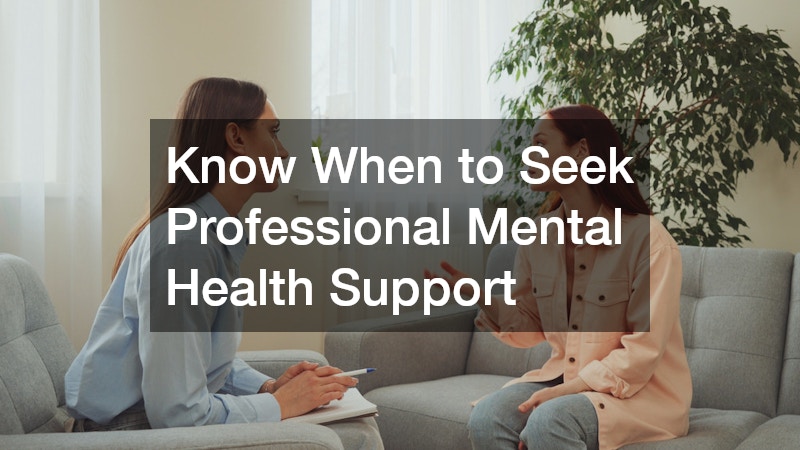
Grounding techniques are valuable tools, but they work best as part of a broader plan for managing anxiety, not as a complete substitute for treatment. If physical symptoms are frequent, intense, or interfering with daily life, working with mental health therapists can help identify patterns and triggers that grounding alone cannot address. Therapy also offers structured approaches, such as cognitive behavioral therapy, that target the thought patterns fueling the physical response.
There is no single sign that means you must seek help, but certain patterns are worth paying attention to. Persistent physical symptoms, avoidance of daily activities, or a sense that anxiety is worsening despite consistent grounding practice are all reasonable reasons to reach out. Professional support does not mean grounding techniques have failed; it means you are addressing anxiety from multiple angles at once.
- Physical symptoms occurring daily or nearly daily
- Avoiding work, social situations, or errands due to anxiety
- Grounding techniques providing only brief or minimal relief
- Anxiety accompanied by panic attacks or intense fear
Managing the physical side of anxiety takes patience, experimentation, and a willingness to address both the mind and body together. Start with one or two grounding techniques that feel manageable, practice them regularly, and pay attention to which ones genuinely ease your symptoms. If physical sensations persist or worsen despite consistent effort, reach out to a qualified professional who can help you build a more complete plan for lasting relief.